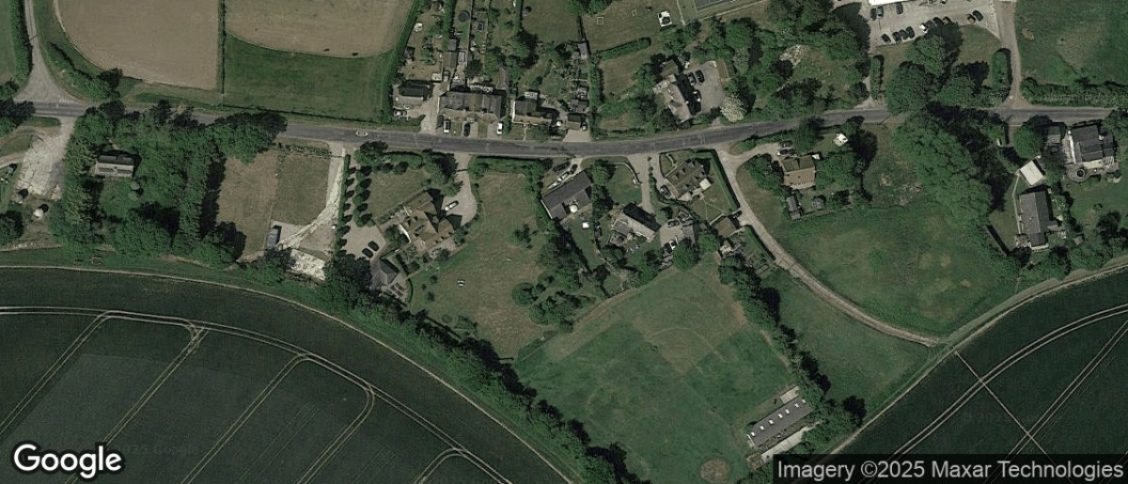
Nuthampstead isn’t your typical Hertfordshire village – it’s a tiny rural hamlet tucked away in the northeastern corner of the county, offering splendid isolation for those seeking escape from urban life. With fewer than 200 residents, this place defines “small community” in every sense. The following article cuts through the countryside romanticism to examine whether Nuthampstead actually delivers as a place to live. Spoiler alert: if you’re after bustling high streets and convenient amenities, you’ll be sorely disappointed – but if peaceful countryside and historic charm tick your boxes, there might be something here for you. The lack of facilities is counterbalanced by extraordinarily low crime rates and some genuinely beautiful surroundings – though you’ll need a car and a healthy bank balance to make it work.
Is Nuthampstead safe?
The question of safety in Nuthampstead almost seems laughable to locals, who often joke that the biggest danger is being bored to death. This tiny rural settlement experiences minimal crime, with figures sitting at a remarkable 59% below the regional average. The handful of incidents that do occur tend to be concentrated around Bell Lane, Park Farm Lane, and Nuthampstead Road – typically minor matters like the occasional anti-social behaviour report or rare vehicle-related incident.
The community maintains an informal neighbourhood watch approach, with residents naturally keeping an eye out for unfamiliar vehicles or activity – not through paranoia but simply because newcomers stand out in such a small place. The isolated nature of the hamlet means opportunistic crime is virtually non-existent, as criminals generally prefer easier targets with quick escape routes and less chance of being noticed.
Is Nuthampstead a nice place to live for families?
Families considering Nuthampstead face a curious paradox: while it offers the kind of safe, natural environment many parents dream about for raising children, the practicalities present significant challenges. School runs, access to activities, and social opportunities all require planning and transport.
Schools
There are no schools within Nuthampstead itself, meaning parents must be prepared for daily school runs. The nearest options include Anstey First School and Barkway VA Church of England First School, both rated ‘Good’ by Ofsted and located just over a mile away in neighbouring villages. Barley Church of England First School, also rated ‘Good’, sits a bit further at around 2.3 miles distance. All these schools fall outside Nuthampstead proper, meaning families moving to the area should check catchment policies carefully before assuming places will be available.
For secondary education, families face longer journeys, typically to schools in Royston or Buntingford. This educational diaspora means children from Nuthampstead often find themselves scattered across different schools, which can complicate social connections and after-school activities.
Family activities
Nuthampstead itself offers little in the way of organised children’s activities or playgrounds. What it does provide is boundless countryside for exploration, nature walks, and cycling along quiet lanes. The local pub, The Woodman Inn, is family-friendly and occasionally hosts community events. For structured activities like swimming lessons, sports clubs, or youth groups, families must travel to nearby towns like Royston or Buntingford.
The hamlet attracts a diverse demographic, with a mixture of retirees, agricultural workers, and families who’ve chosen rural life over convenience. School holidays can be particularly challenging for working parents given the lack of local childcare options.
Is Nuthampstead expensive?
Bluntly put, Nuthampstead commands premium prices for its rural charm and historic properties. The housing stock consists primarily of detached period homes, converted farm buildings, and a smattering of cottages – none of which come cheap. Properties here typically sell for 15-20% above equivalent homes in nearby market towns, reflecting the premium placed on genuine rural tranquility within commutable distance of Cambridge and London.
The rental market is virtually non-existent, with availability 100% below regional averages. When properties do become available to rent, they’re typically snapped up through word-of-mouth before ever reaching public listings. This creates a challenging environment for prospective residents hoping to “try before they buy.”
The hamlet’s northern edge, with its views across open farmland, tends to command the highest prices, while properties along the main through-road fetch slightly less due to the (still minimal) traffic. Those seeking more affordable options might consider nearby Barkway or Barley, which offer similar rural character with slightly better amenities and transport connections.
What transport links are there?
Transport in Nuthampstead can be summarised in three words: you need wheels. Public transport is essentially non-existent, with no regular bus service passing through the hamlet. The nearest railway stations are at Royston (approximately 7 miles) or Ashwell & Morden (about 8 miles), offering services to Cambridge and London King’s Cross.
Road connections are reasonable, with the B1368 providing access to the A10 for Cambridge-bound commuters or the A505 for those heading toward Luton or Stevenage. Most households maintain at least two cars, and residents quickly become accustomed to planning journeys carefully. The nearest taxi firms operate from Royston and typically require advance booking – spontaneous nights out require designated drivers or pre-arranged transport.
Cycling is popular for recreation but less practical for daily needs given the distances involved and the sometimes challenging rural roads, particularly in winter. Residents joke that delivery drivers often need talking in by phone for their first visit, as satellite navigation systems can struggle with the hamlet’s scattered layout.
What amenities are available in Nuthampstead?
Calling Nuthampstead’s amenities “limited” would be generous – they’re virtually non-existent. The hamlet’s social heart is The Woodman Inn, a characterful 17th-century pub serving decent food and local ales. Beyond this solitary establishment, residents must travel for everything else.
The nearest shops are in Barkway or Barley, offering basic necessities, while proper supermarket shopping requires a trip to Royston. Healthcare facilities are similarly distant, with GP services in Buntingford or Royston and the nearest hospitals in Cambridge or Stevenage.
Internet connectivity, once problematic, has improved in recent years with the rollout of better broadband infrastructure, making working from home increasingly viable. Mobile phone coverage remains patchy, with residents often knowing exactly which window or garden corner offers the best signal for important calls.
What Nuthampstead lacks in conventional amenities, it makes up for in character. The former WWII airfield hosts a small museum dedicated to the 55th Fighter Group, and the surrounding countryside offers abundant wildlife spotting opportunities.
What is the surrounding outdoor area like?
The countryside around Nuthampstead represents rural Hertfordshire at its finest. Public footpaths crisscross the surrounding fields and woodlands, with the Hertfordshire Way passing nearby. Reed Marsh Nature Reserve lies a short distance away, offering interesting wetland habitats and birdwatching opportunities.
Heydon Woods provides pleasant walking routes, particularly spectacular during bluebell season, while the gently rolling landscape offers panoramic views across the county border into Cambridgeshire. Horse riding is popular locally, with several stables in the vicinity offering lessons and hacking opportunities.
Cyclists appreciate the network of quiet lanes connecting surrounding villages, though the undulating terrain provides a decent workout. The former airfield, now partially returned to agriculture, retains elements of its WWII heritage including remnants of runways and a memorial to the American airmen once stationed there.
So, what’s the verdict?
Nuthampstead offers an increasingly rare proposition: genuine rural seclusion within the Home Counties. For those seeking peace, countryside views, and a tight-knit community, it delivers handsomely. The exceptional safety record and beautiful surroundings create an environment that feels removed from modern pressures.
However, potential residents must honestly assess whether they’re prepared for the practicalities of hamlet living. The lack of amenities, educational facilities, and transport options creates daily challenges that can wear thin, particularly during winter months when dark lanes and inclement weather make journeys more difficult.
Financially, the premium property prices and necessity for multiple vehicles create a high cost of living that must be factored into decisions. Ultimately, Nuthampstead works best for those with established work-from-home arrangements, comfortable finances, and a genuine appreciation for rural life beyond the romantic notion.
What are the alternatives?
Those drawn to Nuthampstead but concerned about its limitations might consider several alternatives. Barkway, just over a mile away, offers similar character with the addition of a village shop, primary school, and slightly better transport connections. Property prices tend to be 5-10% lower than Nuthampstead.
Barley provides a picturesque setting with its historic green and pond, plus a well-regarded primary school and The Chequers pub. Both villages maintain the rural character but slightly reduce the isolation factor.
For those requiring more amenities while still enjoying countryside proximity, Royston offers a market town experience with rail connections, supermarkets, schools, and healthcare facilities, though at the cost of increased traffic and noise. Buntingford represents another market town alternative with a particularly attractive high street and growing community facilities.
Each alternative involves a trade-off between convenience and character – the perfect balance depending entirely on individual priorities and lifestyle requirements.